The gate is boarding, someone suddenly needs the bathroom, and your child remembers their favorite stuffed animal is in the suitcase you just checked. Learning how to pack for family flights is less about fitting more into your bags and more about protecting the small comforts that keep a travel day moving. A thoughtful packing plan gives your family a calmer flight and leaves more energy for the places, meals, and unexpected discoveries waiting on the other side.
Start With the Flight, Not the Destination
It is tempting to pack for every possible moment of the vacation first. Instead, begin with the journey itself. A family flight has its own needs: security lines, delayed boarding, cramped seats, temperature changes, snack emergencies, and the possibility that checked luggage may arrive later than you do.
Think of your packing in three layers. First is what must be within reach from takeoff to landing. Second is what your family needs for the first 24 hours at the destination. Third is everything else. This approach prevents the common mistake of placing all the useful items in checked bags while carrying too many things you will not touch.
For families with babies or toddlers, the first layer will be larger. For older kids, it may be mostly snacks, a light layer, entertainment, and a few familiar items. The goal is not to bring your entire home aboard. It is to make the cabin feel manageable.
Build One Family Flight Bag
Rather than giving every traveler a fully loaded bag, designate one personal item as the family flight bag. A backpack with easy-access pockets usually works best. It stays at your feet, keeps essentials in one known place, and avoids the scramble of searching through several bags when the seatbelt sign is on.
Pack the flight bag in categories, using small pouches or zip bags so essentials do not disappear into the bottom. Your core kit should include:
- Travel documents, IDs, boarding details, wallet, keys, medications, and a portable charger
- Wipes, tissues, hand sanitizer, bandages, and any prescription items your family may need
- An extra outfit for each child, plus one spare shirt for the adult most likely to handle spills
- A lightweight sweatshirt or jacket, because cabins can feel unexpectedly cold
- Refillable water bottles to fill after security, along with easy snacks
- A small comfort item, such as a lovey, compact blanket, or soft neck pillow
Keep documents and medications in the same pocket every time you travel. Consistency sounds simple, but it removes a surprising amount of stress during a busy airport morning.
The First-24-Hours Rule
Every person should have enough in their carry-on to get through the first day if checked luggage is delayed. For adults, that may mean clean underwear, a shirt, basic toiletries, and any must-have medication. For children, add pajamas and one dependable outfit.
This does not require packing a second vacation wardrobe. It is simply insurance for a smoother arrival, especially after an evening flight when stores may be closed and everyone is ready to sleep.
Pack Snacks Like a Parent Who Knows Delays Happen
A well-timed snack can change the mood of an entire row. Pack more than you expect to need, particularly if you have a connection or a child who is sensitive to schedule changes. Choose foods that are familiar, filling, and not too messy.
Good options include crackers, pretzels, fruit pouches, granola bars, dried fruit, trail mix for older children, and sandwiches for the travel day. Avoid snacks that crumble heavily, melt easily, or have a strong smell in close quarters. A few treats can be useful, too, but save them for the moments when novelty truly helps.
Liquids and gels are subject to airport security rules, so check current requirements before leaving home. Infant and toddler necessities may be handled differently, but allow extra time at security if you are carrying milk, formula, or puree pouches. Keep these items together and easy to show.
Give Kids a Small Bag With a Real Job
Children who are old enough to carry a small backpack can bring one. The key is to make it light and purposeful, not a miniature suitcase filled with toys they will not use. Let them choose a few items, then guide the final edit.
A child’s bag can hold a water bottle, headphones, a sweatshirt, one comfort item, and two or three quiet activities. Giving kids ownership over their bag helps them feel part of the adventure, and it teaches a useful travel habit: the things you care about most should travel with you.
For younger children, pack entertainment in stages. Start with a simple activity for boarding, then bring out a new item after takeoff, another midway through the flight, and saved screen time when needed. A little pacing makes familiar activities feel fresh.
Consider bringing:
- Sticker books, coloring supplies, reusable activity pads, or a small card game
- Downloaded movies, shows, audiobooks, or kid-friendly podcasts with kid-sized headphones
- A favorite small toy plus one new surprise item
- A few family photos or a simple map to talk about where you are going
The map is especially helpful for turning the flight into part of the trip. Point out the destination, talk about one thing you hope to see, and invite kids to choose a first-day wish. Anticipation can be its own form of entertainment.
Choose Clothes That Work Harder
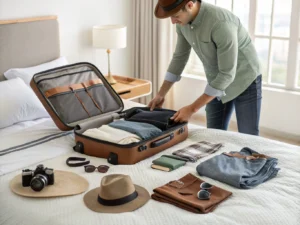
Family packing gets easier when every item earns its place. Choose soft, layer-friendly clothes that can be reworn, mixed, and washed if necessary. Flights call for comfort, but you can still arrive looking ready to begin your trip.
Wear bulkier items on the plane: sneakers, jackets, and heavier pants. Pack lighter pieces that can work across several days. Neutral basics simplify mixing and matching, while one bright shirt, patterned dress, or favorite accessory can bring personality to vacation photos.
For a short getaway, resist packing an outfit for every scenario. Most destinations have places to buy forgotten sunscreen, diapers, or an extra T-shirt. The trade-off is worth it when you are not dragging oversized bags through parking garages, train stations, or charming streets that were never designed for rolling luggage.
If you are sharing one checked suitcase, divide each person’s clothing between bags when possible. That way, one delayed suitcase does not leave one traveler without essentials.
Keep Security and Boarding in Mind
The best family packing system works before you enter the terminal. Place liquids in a clear, easy-to-reach bag. Keep electronics accessible if screening requires them to come out. Wear shoes that are easy to remove and put back on, especially for children who may need help.
At the gate, do a quick reset before boarding. Refill water bottles, use the restroom, change diapers if needed, and pull out the items you expect to use first. Put the flight bag under the seat in front of you and store the less urgent bags overhead. Once the aisle fills, you will be glad the essentials stayed close.
Families traveling with a stroller or car seat should review airline policies before the trip. Gate-checking can be convenient, but it depends on your connection time, airport layout, and how easily your child can manage without the stroller. A lightweight travel stroller is often useful for long terminals, while some older kids do better with one less item to manage.
How to Pack for Family Flights Without Carrying Everyone’s Stress
Packing is also a mindset. Children notice when adults are rushed, so leave room for the reality that a family travel day may not look perfectly organized. Build in time for a slow security line, an unplanned bathroom stop, or a snack request five minutes after you closed the bag.
The night before, place every carry-on by the door and do one final check: documents, medications, chargers, comfort items, snacks, and a change of clothes. Then stop adding things. Overpacking often comes from last-minute worry, not a genuine need.
A family flight is the opening chapter of the story you came to create. Pack for comfort, leave room for flexibility, and remember that the best souvenir from the journey may be the moment everyone looks out the window and realizes a new place is just ahead.